

Douens Spirits: The Faceless Children of Caribbean Folklore
DOUENS


Douens
The Lost Spirits of Unbaptised Children
Origins
The Douens (pronounced Doo-en, singular Douen) are one of the most distinctively Caribbean supernatural figures, particularly well documented in Trinidad and Tobago folklore. Their origins are rooted in a fusion of West African beliefs about the spirits of children who die before being initiated or named — a state of spiritual incompleteness — and Catholic colonial beliefs about unbaptised children being denied entry to heaven. The result is a uniquely Caribbean tragic figure: a child spirit condemned to wander.
Description & Appearance
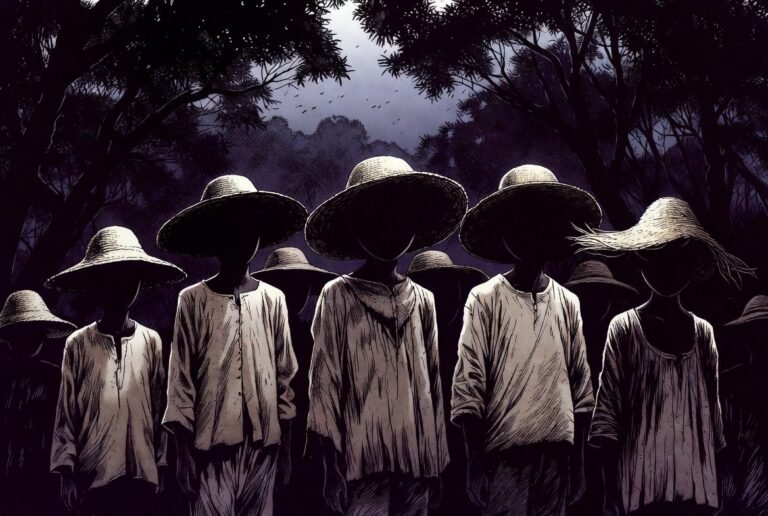
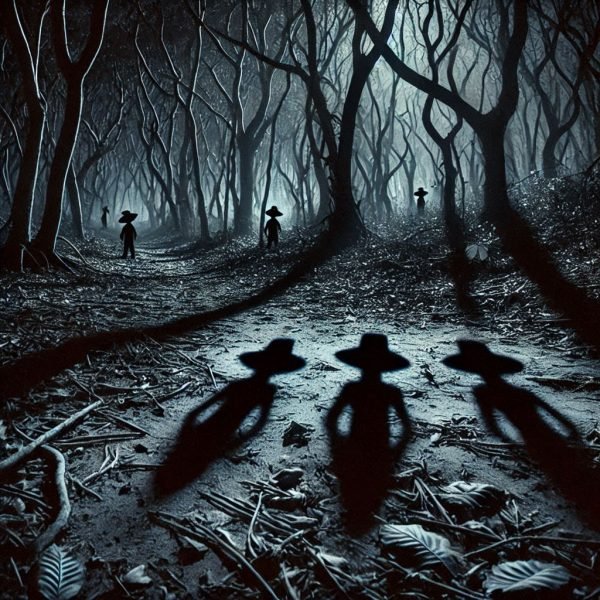
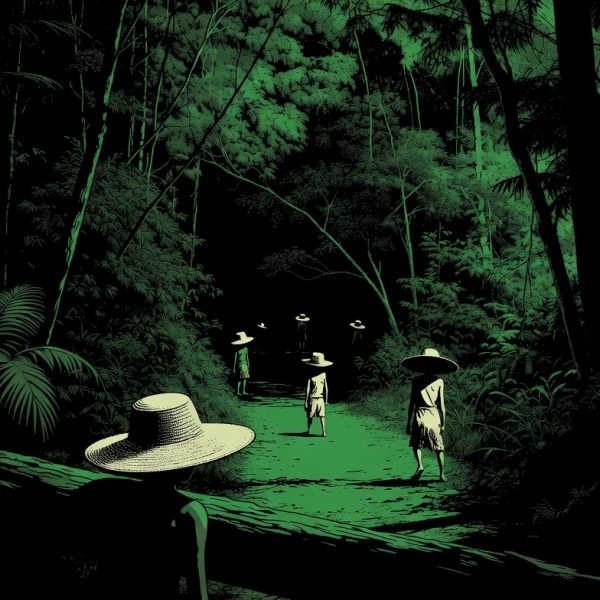
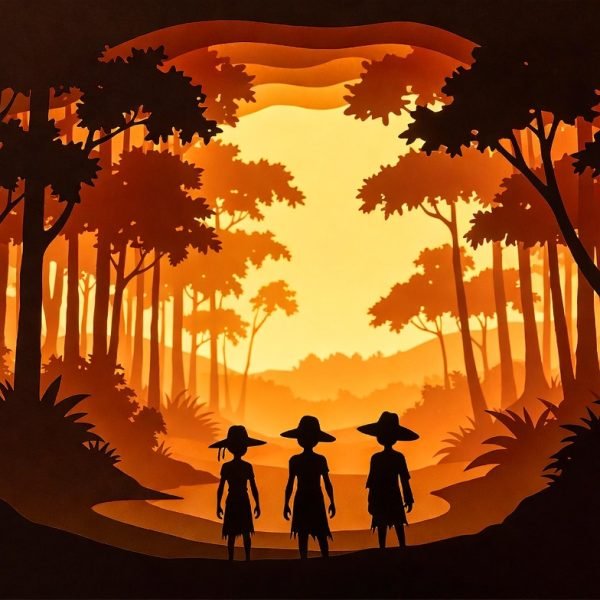
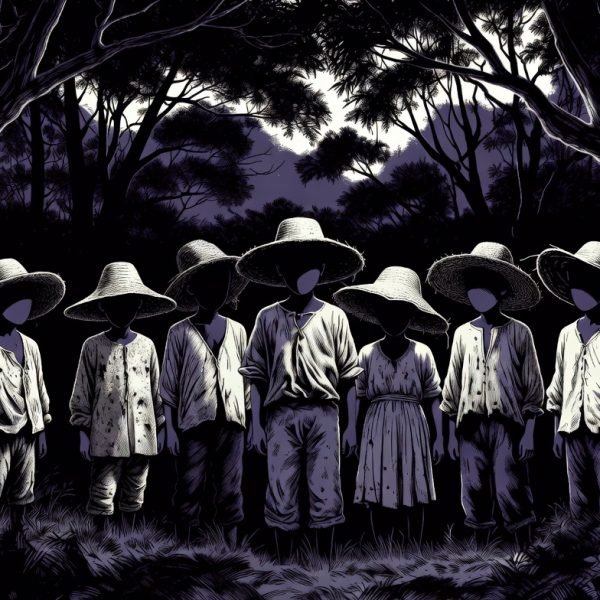
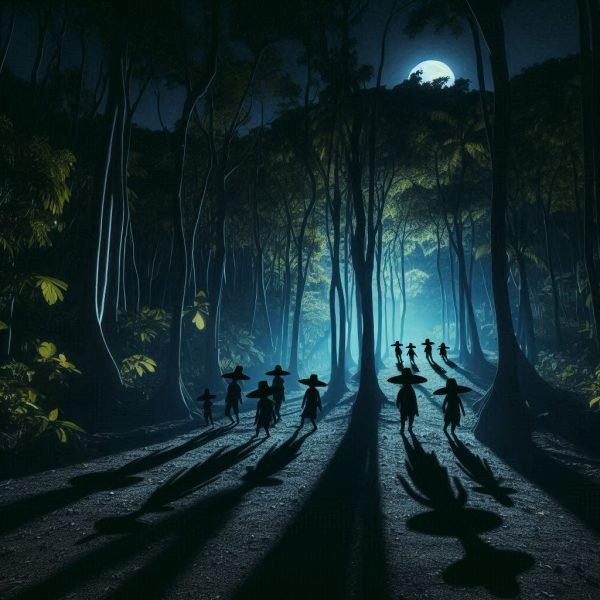
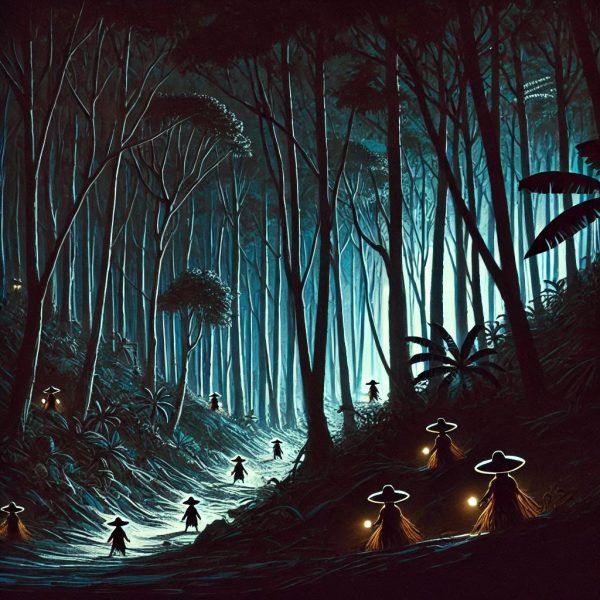
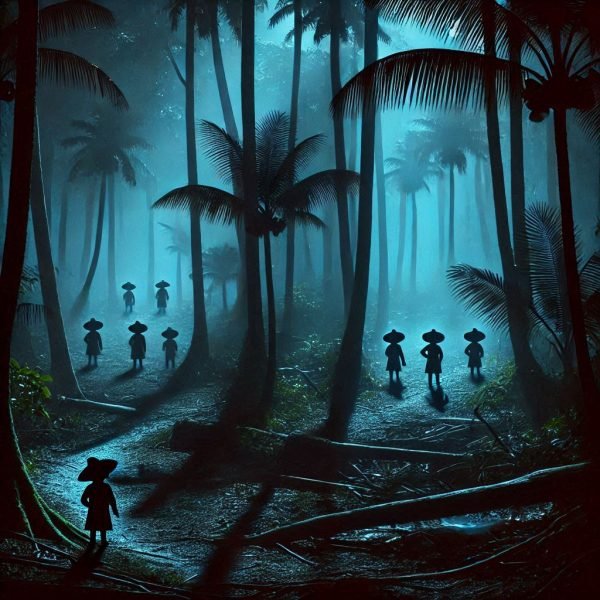
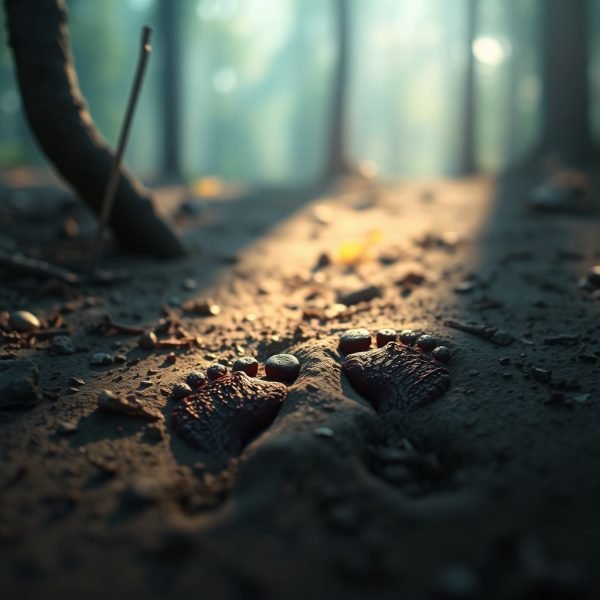
Douens are the spirits of children who died before they were baptised. They are small — child-sized — and their most distinctive physical feature is their feet, which are turned completely backwards, with toes pointing behind them and heels pointing forward. They have no faces — where features should be, there is only smooth blank flesh. They wear large floppy straw hats that cover the absence of their faces. They travel in groups, usually at dusk or night, and communicate through a high-pitched eerie call that sounds disturbingly like a child’s voice.
Behaviour & How They Operate
Douens are compelled to seek the company of living children. They call living children by name — luring them toward the forest or water — and once a child follows them, that child is led deeper and deeper until they are hopelessly lost. They are drawn specifically to children whose names are spoken aloud outdoors — which is why there is a strong cultural tradition in Trinidad of not calling children’s names outside, particularly near forests, rivers, or at dusk.
Warning Signs
Children’s voices heard in the forest or near water when no children should be present
Your child reporting a new friend they met outside who they cannot fully describe
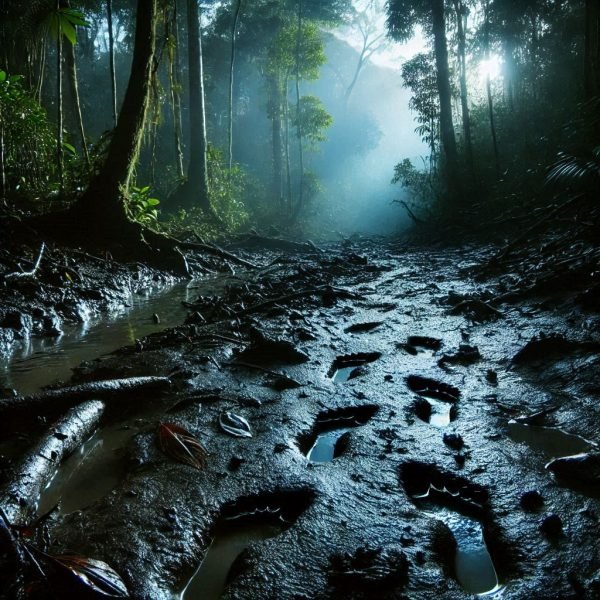
Small backward footprints found in mud or soft ground
Children becoming inexplicably drawn toward forested or isolated areas
A high-pitched wailing or calling sound near the forest edge at dusk
How to Ward Them Off
Never call your children by name outdoors — especially near forests or rivers and especially at dusk or night
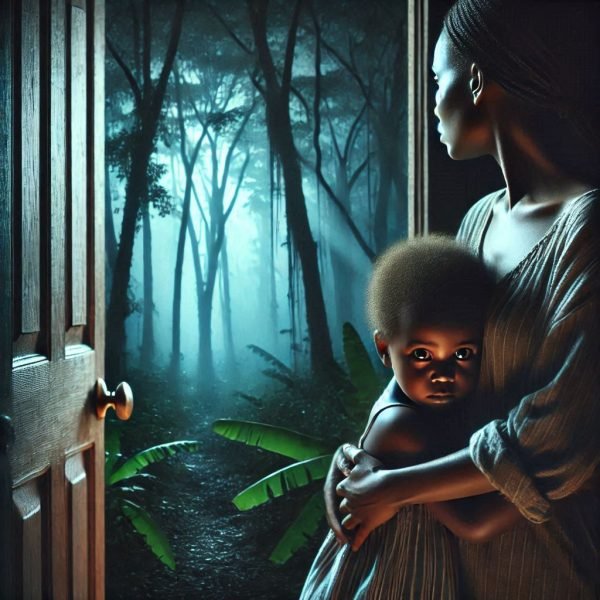
Keep children indoors after dark
Pinning an open safety pin to a child’s clothing — iron is a widely recognised spiritual deterrent
Salt at doorways prevents them from entering the home
Baptising children promptly after birth was historically the primary preventative measure
How to Evade Them
If you hear Douens calling, do not respond and do not follow the sound. Get children indoors immediately. Some accounts say that reversing your own shoes — putting them on the wrong feet — confuses Douens, as their own backwards feet make them susceptible to directional disorientation.
Fun Facts
The Douens are unique among Caribbean folklore figures in being explicitly children — making them simultaneously pitiable and terrifying
Their backwards feet are thought to prevent tracking — following their footprints leads you in the wrong direction
In some accounts, Douens were once living children who wandered into the forest and were transformed, adding another layer of tragedy to the legend
The legend reinforced a practical safety rule — keeping children inside after dark — that had genuine protective value in communities near dense forest and rivers
Douens appear in several landmark works of Caribbean art and literature and are among the most visually striking figures in regional folklore
