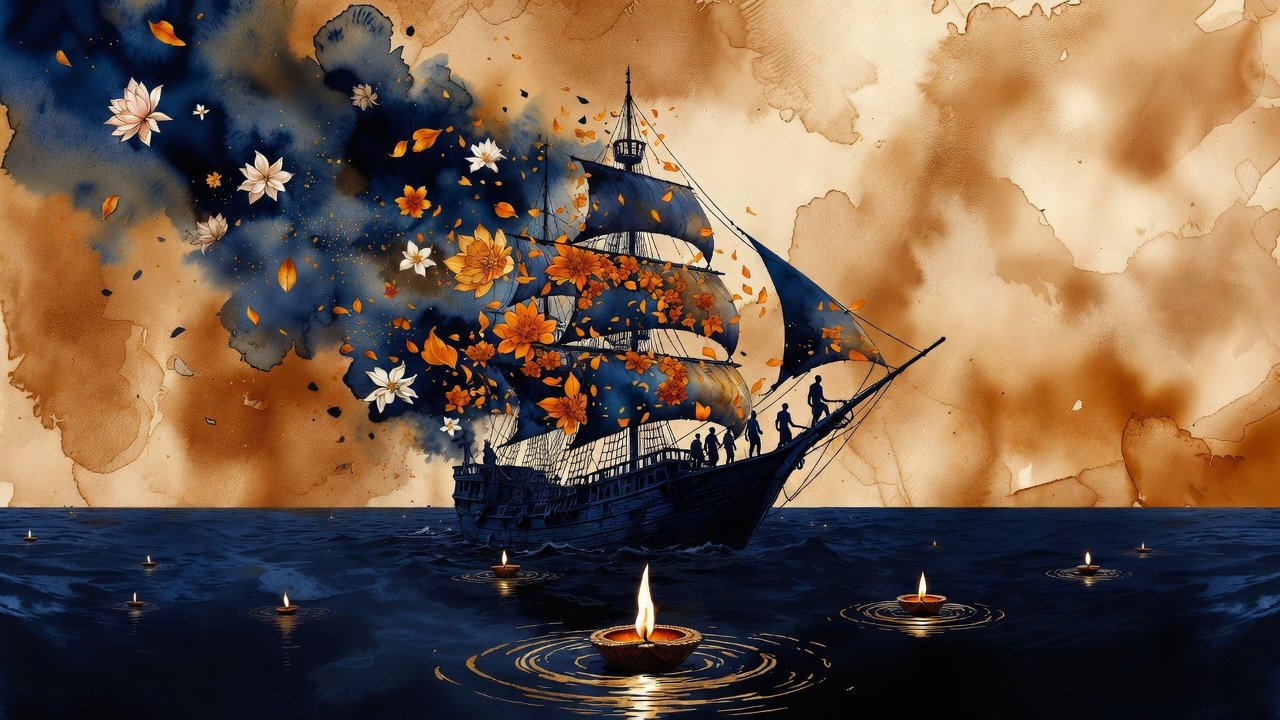
On May 30, 1845, a ship named the Fatel Rozack docked in Trinidad. 225 people stepped ashore. They had been at sea for 103 days. They had crossed the Kala Pani — the Black Water — a crossing many believed would break the soul. It didn’t.
Most people know the Caribbean as a place of extraordinary beauty — sun, sea, and a culture that has given the world steelpan, reggae, calypso, and carnival. But underneath that vivid, joyful surface is a history of tremendous complexity: of displacement, survival, and the stubborn, extraordinary human capacity to build something lasting from conditions that were never designed for building.
Indian Arrival Day, observed every year on May 30 in Trinidad and Tobago, sits at the heart of that history. It marks the arrival of the first Indian indentured labourers to Trinidad — a moment that would permanently reshape the island’s culture, food, music, faith, and identity. And it begins with a ship.
What Is Indian Arrival Day?
Indian Arrival Day is a national public holiday in Trinidad and Tobago, observed on May 30 each year. It commemorates the arrival of the first ship carrying Indian indentured labourers to Trinidad on May 30, 1845. That ship was named the Fatel Rozack.
Indian Arrival Day marks the arrival of the Fatel Rozack at Port of Spain, Trinidad, on May 30, 1845, carrying 225 Indian indentured labourers — the first of approximately 143,939 who would arrive between 1845 and 1917. May 30 was first officially declared a public holiday in 1994 (as Arrival Day) and formally named Indian Arrival Day in 1995. It is also observed in Guyana, Suriname, and across the Indo-Caribbean diaspora. It recognises the cultural contributions of Indo-Caribbean people and honours the sacrifice of those who made the crossing.
Indian Arrival Day is not simply a date on a calendar. It is a covenant — an annual act of collective memory that says: we know where we came from, we know what it cost to get here, and we will not forget.
Before the Ship: Why They Left India
To understand Indian Arrival Day, you have to understand why 225 people would board a ship for a 14,000-mile ocean crossing to a small Caribbean island they had never seen, to work on estates they had never chosen, for a wage they had no guarantee of receiving.
The answer lies in the intersection of two enormous historical forces: the end of African slavery in the British Caribbean, and the crisis of rural poverty in 19th-century colonial India.
On August 1, 1838, full emancipation came to the British Caribbean — ending the Apprenticeship system that had kept formerly enslaved Africans in bound labour since 1834. The sugar estates of Trinidad and the wider British Caribbean suddenly faced a crisis: the labour force that had built their wealth was free. The formerly enslaved people, unsurprisingly, largely refused to continue working on the plantations that had held them in bondage.
“The indentureship system was designed to fill a labour gap. But for those who crossed, it was a gamble with everything they had — including, by their own belief, their souls.”
The British colonial administration responded by looking east. India, then under British colonial rule, had a vast population of agricultural workers — many from the provinces of Uttar Pradesh and Bihar — facing poverty, drought, and famine. Recruiters, known as arkattis, were dispatched to rural villages with promises of wages, land, and a return passage to India after five years of contract work. The system they were recruiting into was called indentureship.
The reality of indentureship was not what was promised. Workers were bound by five-year contracts with their employers. They could not leave their estate without a pass. Breach of contract was a criminal offence. The ‘wages’ were minimal and subject to deductions. The promised return passage was difficult to claim and often denied.
It was, as historians widely document, a form of bondage with paperwork — an economic and legal trap that replaced one labour system built on coercion with another.
The Kala Pani: The Crossing That Was Supposed to Break the Soul
For the Hindu passengers on the Fatel Rozack — and the majority of indentured labourers who followed — the ocean crossing carried a dimension of suffering beyond the physical. In Hindu and Buddhist tradition, crossing the ocean (the Kala Pani, literally ‘Black Water’) caused spiritual defilement. It severed the traveller from caste purity, from the rituals of home, from the sacred geography that structured their religious lives.
The Kala Pani — What It Meant
| Kala Pani means | ‘Black Water’ in Hindi — a term for the ocean in Hindu and Buddhist spiritual tradition |
| Spiritual significance | Crossing the Kala Pani was believed to cause ritual impurity and spiritual disconnection from home |
| The sacrifice | Many passengers knew this belief and crossed anyway — making the journey an act of profound personal sacrifice |
| The distance crossed | Approximately 14,000 miles from the shores of India to Trinidad |
| Duration of voyage | 103 days at sea on the Fatel Rozack, departing February 1845, arriving May 30, 1845 |
To cross the Kala Pani was to lose something — or to believe that you were losing something — that could not be recovered. And yet they crossed. Families crossed. Young men and women travelling alone crossed. People who had never seen the ocean crossed it for 103 days.
That decision — to sacrifice ritual purity, ancestral connection, and everything familiar for the chance of something survivable on the other side — is the founding act of Indo-Caribbean identity. It is why Indian Arrival Day is not a celebration of suffering. It is a celebration of courage.
The Fatel Rozack: The Ship That Started It All
The Fatel Rozack left Calcutta in February 1845. Of the 237 passengers who boarded in India, 225 disembarked in Trinidad on May 30, 1845, docking in the Gulf of Paria at Port of Spain. It was the first ship in what would become a 72-year migration of people from the Indian subcontinent to Trinidad — a migration that would bring approximately 143,939 people to the island between 1845 and 1917, when the indentureship system officially ended.
Ship name: Fatel Rozack (spelling confirmed per T&T official records and the Dennis Moore authoritative study)
Departed: Calcutta, February 1845 (February 23, 1845 per the Dennis Moore definitive research)
Arrived: Gulf of Paria, Port of Spain, Trinidad — May 30, 1845
Duration: 103 days at sea
Distance: Approximately 14,000 miles
Passengers boarded: 237 │ Passengers disembarked: 225 (official T&T figure)
Origin of passengers: Primarily Uttar Pradesh and Bihar, northern India
System: British colonial indentureship — standard contract of 5 years
Total arrivals 1845–1917: Approximately 143,939 Indian indentured labourers to Trinidad
The passengers of the Fatel Rozack came with almost nothing their captors could quantify. No land. No accumulated wealth. A few personal possessions. But they carried what could not be confiscated: memory. Language. Faith. The names of their gods. The rhythms of their music. The knowledge of how to plant, cook, pray, and celebrate. And on the other side of the Kala Pani, in the red soil of Trinidad, they planted all of it.
What They Built: The Indo-Caribbean Legacy in Trinidad
The story of Indian Arrival Day does not end with the arrival. It continues in the daily life of Trinidad and Tobago — in the food on every table, the music at every celebration, the temples beside the churches, the mosques beside the mandirs, the languages threaded through Trinidadian speech.
Food. The culinary contribution of Indo-Caribbean people to Trinidad is so embedded that it is simply called Trinidadian food. Roti — flat bread cooked on a tawa — is eaten everywhere. Doubles, arguably the most beloved street food in the country, is a direct descendant of Indian barra and channa. Curry goat, curry duck, dhal, aloo pie, and the entire vocabulary of spice that defines Trinidadian cooking — turmeric, cumin, masala, geera — arrived with the indentures and never left.
Music and Ritual. The tassa drum — a clay or metal drum played with a stick — is one of the most distinctive sounds of Indo-Trinidadian culture, heard at weddings, at Hosay processions, and at celebrations across the island. The rhythms of tassa, preserved across 181 years, connect present-day Trinidadians to the provinces of northern India from which their ancestors came.
Faith and Celebration. Trinidad’s Divali — the Festival of Lights — is one of the largest and most spectacular in the world outside India. The Divali Nagar site in Chaguanas draws thousands of visitors each year. Phagwa (Holi), Hosay (originating as a Shia Muslim commemoration of the martyrdom of Imam Hussein, uniquely transformed in Trinidad into a broader Indo-Caribbean cultural festival), and Eid ul-Fitr are all observed nationally, reflecting the religious plurality that indentureship brought to the island.
Language and Identity. Bhojpuri — the dialect spoken by the majority of indentured labourers — has been absorbed into Trinidadian creole speech in words, phrases, and cadences that most Trinidadians use without knowing their origin. The Bhojpuri of Trinidad, mixed with English, French Creole, and African languages, is itself a document of the island’s layered history.
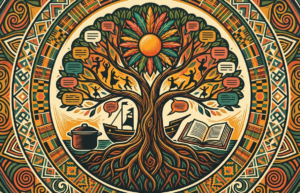
“Today, 181 years later, the descendants of those 225 souls fill the halls of Parliament, the stages of Divali Nagar, the fields, the markets, and the temples. The roots crossed an ocean. They are still holding.”
Not Passive, Not Silent: Indo-Caribbean Resistance Under Indentureship
One of the most important corrections the Indian Arrival Day narrative makes is to the idea that the indentured were passive recipients of their conditions. They were not.
Across the period of indentureship, workers organised labour actions, refused to work under illegal conditions, and used the colonial court system — imperfect as it was — to challenge abuses. Women, who comprised approximately one-third of all indentured labourers to Trinidad, resisted control of their movement and their bodies with a consistency that disturbed colonial authorities. Protests, strikes, and individual acts of defiance against the estate system were documented throughout the 72-year period.
In 1917, mass protest — combined with growing international pressure and the advocacy of Indian independence leaders including Mahatma Gandhi, who had campaigned against indentureship conditions in South Africa between 1893 and 1914 — contributed to the British Parliament ending the indentureship system entirely.
Emancipation from indentureship was not given. Like so many freedoms in Caribbean history, it was demanded.
Why Indian Arrival Day Matters in 2026
In an era when the stories of non-European peoples are finally being told with the depth and complexity they deserve, Indian Arrival Day sits at an important intersection. It is a story about migration — forced and semi-voluntary. It is a story about cultural survival under conditions of systematic suppression. It is a story about the extraordinary creativity that emerges when people must build an identity from almost nothing.
It is also a story about what the Caribbean is. Trinidad and Tobago is one of the most ethnically, religiously, and culturally diverse nations in the Western Hemisphere — a nation shaped by Amerindian peoples, by the forced migration of Africans across the Middle Passage, by Indian indentureship, by Chinese and Syrian-Lebanese immigration, by European colonial presence. Indian Arrival Day is one chapter in that longer story. But it is a chapter without which the story makes no sense.
For the Indo-Caribbean diaspora — in the United Kingdom, Canada, the United States, and across the world — Indian Arrival Day is an anchor. A date that says: this is where your family’s story turned. This is the ship. This is the crossing. This is what survived.
Years since the Fatel Rozack arrived on May 30, 1845
Indian indentured labourers arrived in Trinidad between 1845 and 1917
Days at sea on the Fatel Rozack’s maiden indenture voyage
Miles — the distance from India to Trinidad
Duration of the indentureship system in Trinidad (1845–1917)
Year May 30 was first declared a public holiday; renamed Indian Arrival Day in 1995
How Indian Arrival Day Is Celebrated
In Trinidad and Tobago, Indian Arrival Day is a national public holiday filled with events that honour both the historical significance of the day and the living culture it gave rise to. Celebrations include:
- Ceremonial re-enactments of the arrival at various cultural sites and beaches across Trinidad
- Cultural showcases featuring classical Indian dance (bharatanatyam, kathak), tassa drumming, and folk music
- Interfaith services at mandirs, mosques, and community halls across the island
- Academic events, lectures, and heritage exhibitions examining the history of indentureship and the Indo-Caribbean contribution to national identity
- Community meals and festivals celebrating Indo-Trinidadian cuisine — roti, curry, doubles, and sweets
- Pilgrimages to historical landing sites and estate grounds associated with the first arrivals
In Guyana and Suriname — both of which received large populations of Indian indentured labourers during the same period — similar commemorations take place. Across the diaspora in the UK, Canada, and the United States, Indo-Caribbean cultural organisations hold events that connect community members to this shared history.
Frequently Asked Questions: Indian Arrival Day
When is Indian Arrival Day?
Indian Arrival Day is observed on May 30 each year. It marks the date in 1845 when the Fatel Rozack arrived in Trinidad carrying the first Indian indentured labourers to the island.
Which countries observe Indian Arrival Day?
Indian Arrival Day is a national public holiday in Trinidad and Tobago. It is also observed in Guyana (as Arrival Day) and Suriname (as Prawas Din), and by Indo-Caribbean diaspora communities in the United Kingdom, Canada, and the United States. May 30 was first officially declared a public holiday in T&T in 1994 and formally named Indian Arrival Day in 1995.
What was the Fatel Rozack?
The Fatel Rozack was the ship that carried the first Indian indentured labourers to Trinidad. It departed Calcutta in February 1845 (February 23, per the definitive Dennis Moore research) and docked in the Gulf of Paria, Port of Spain, on May 30, 1845, after 103 days at sea. Of the 237 who boarded, 225 disembarked in Trinidad — the official figure per T&T National Archives.
What does Kala Pani mean?
Kala Pani means ‘Black Water’ in Hindi. In Hindu and Buddhist tradition, it refers to the ocean and specifically to the spiritual defilement believed to result from crossing the sea. For the Hindu passengers on the Fatel Rozack and subsequent indenture ships, the crossing represented a profound act of sacrifice — they were believed to lose caste purity by crossing the ocean. The term has become a symbol of the courage required to make the journey.
What is the difference between indentureship and slavery?
Indentureship was a contract-based labour system in which workers signed agreements to work for a fixed period (typically five years) in exchange for wages, housing, and a promised return passage. Unlike slavery, it was technically voluntary and the workers were legally free persons. However, historians widely document that the conditions of indentureship were coercive: breach of contract was a criminal offence, workers could not leave their estates without a pass, wages were minimal and subject to deductions, and the return passage was frequently denied. The system was introduced specifically to replace enslaved African labour following Emancipation in 1838, and it is often described as ‘a new system of slavery.’
How many Indian indentured labourers came to Trinidad?
Between 1845 and 1917, approximately 143,939 Indian indentured labourers arrived in Trinidad. This is the officially documented figure from Trinidad and Tobago historical records. The indentureship system to Trinidad ran for 72 years, ending in 1917 when the last ship, the Ganges, arrived.
Is Indian Arrival Day the same as Caribbean Heritage Month?
They are related but distinct. Caribbean Heritage Month is observed in June, primarily in the United States, following a Presidential Proclamation in 2006. Indian Arrival Day is a specific national holiday observed on May 30 in Trinidad and Tobago, Guyana, Suriname, and the Indo-Caribbean diaspora. Both celebrate aspects of Caribbean history and culture, and Indian Arrival Day content is often featured prominently during Caribbean Heritage Month.
The Roots Are Still Holding
On May 30, 1845, 225 people stepped off a ship onto an island they had never seen, in a country that did not yet fully belong to them, at the start of five years of bound labour they had no guarantee of surviving.
One hundred and eighty-one years later, their descendants are woven into every thread of Trinidadian life. They are in the roti on the table and the tassa at the wedding. In the temples and the mosques. In the Parliament and the university. In the names of villages: Fyzabad, Barrackpore, Felicity, Chandernagore — names taken from the homeland and planted in Caribbean soil, still growing.
The Kala Pani was supposed to break the soul. It did not break these people. It made them into something the Caribbean would be unrecognisable without.
To every Indo-Caribbean son and daughter — your roots crossed an ocean. They are still holding.
Happy Indian Arrival Day.